
I was zooming along on my turbo-trainer on my balcony listening to some random playlist on Apple Music and ran into this great song from 2019 that’s had a lot of airplay: “Blinding Lights” by The Weeknd. It’s very synth-pop (despite its own classification as R&B), and I thought that it would be quite fun to cover it in more of a rock style, with guitars doing all the synthy bits of the original. So that’s what I did.
I’ve only released one other cover version: “Setting sail, coming home” from the Bastion soundtrack. Cover versions are nice and easy to do because you don’t have to think about the songwriting part. That said, this was almost more of a reverse engineering effort than songwriting!
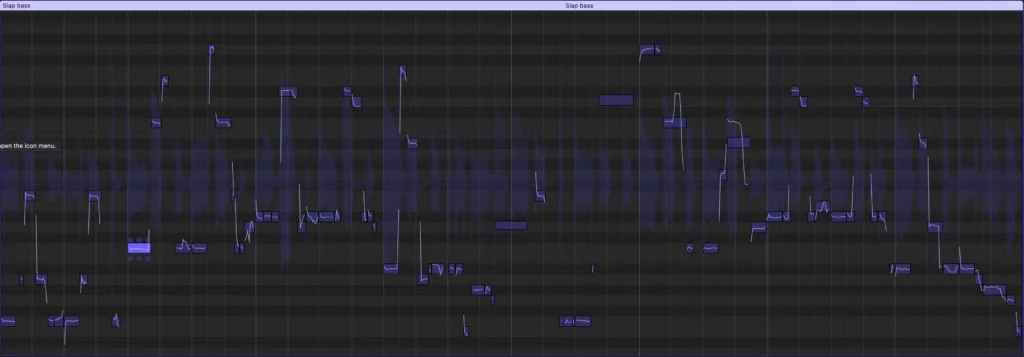
To start with I imported the track into Apple Logic Pro X, where I used its stem splitter to break it out into separate tracks for vocals, drums, bass, and synths. A quick trip through the smart tempo function revealed that the whole track is nailed to a fixed 85.4 bpm, keeping things nice and simple. Then I used the chord identifier to extract a chord track from the synths, and found a matching key (F minor). I applied Flex Pitch, which is typically used for fixing up vocals, to the bass track, making use of its ability to identify the individual notes and clean up the pitch tracking. The bass synth goes very deep, so when I looked at re-playing it on my bass guitar, I initially attempted to drop the bottom string tuning all the way to a B♭, but that was really too far and it was unplayable. So I switched it up an octave, and added an octaver effect to reintroduce the growly lower notes. The main bass line is very simple, mostly long sustained notes, and after all the processing, my bass comes out sounding pretty synthy anyway!
I wanted the drums to have more of a live feel than the original drum machine style, and Logic’s drum kits and players are great for that. I applied a lot of compression using MicroFX’s Refiner plugin. This did make it sound very punchy, but as it also boosts the very minor ambience present in the drum kit instrument, it ended up sounding a little too reverby, even though it was actually a dry signal, but I thought I’d live with that, and turning up the damping in individual drums helped. In places it sounds remarkably like the drums in A-ha’s “Take On Me”, though that was unintentional.
I replayed the recurring synth melody on my guitar through a nice amp model and lots of reverb and delay. That was all quite straightforward and I didn’t need to do much else to it.
I dropped the vocal split track into Dreamtonics Synthesizer V and asked it to convert it to notes and words. It didn’t do a great job and needed a lot of cleanup, but it was still easier than entering all the notes manually. I used the same “Liam” voice database I used on “You make me smile“. I built the backing vocals manually using the same voice. For both tracks I used SV’s unison feature to fill things out, aside from the verses which remain using a single voice. Then followed lots of fine tuning of the timings and voice controls to make it sound natural.
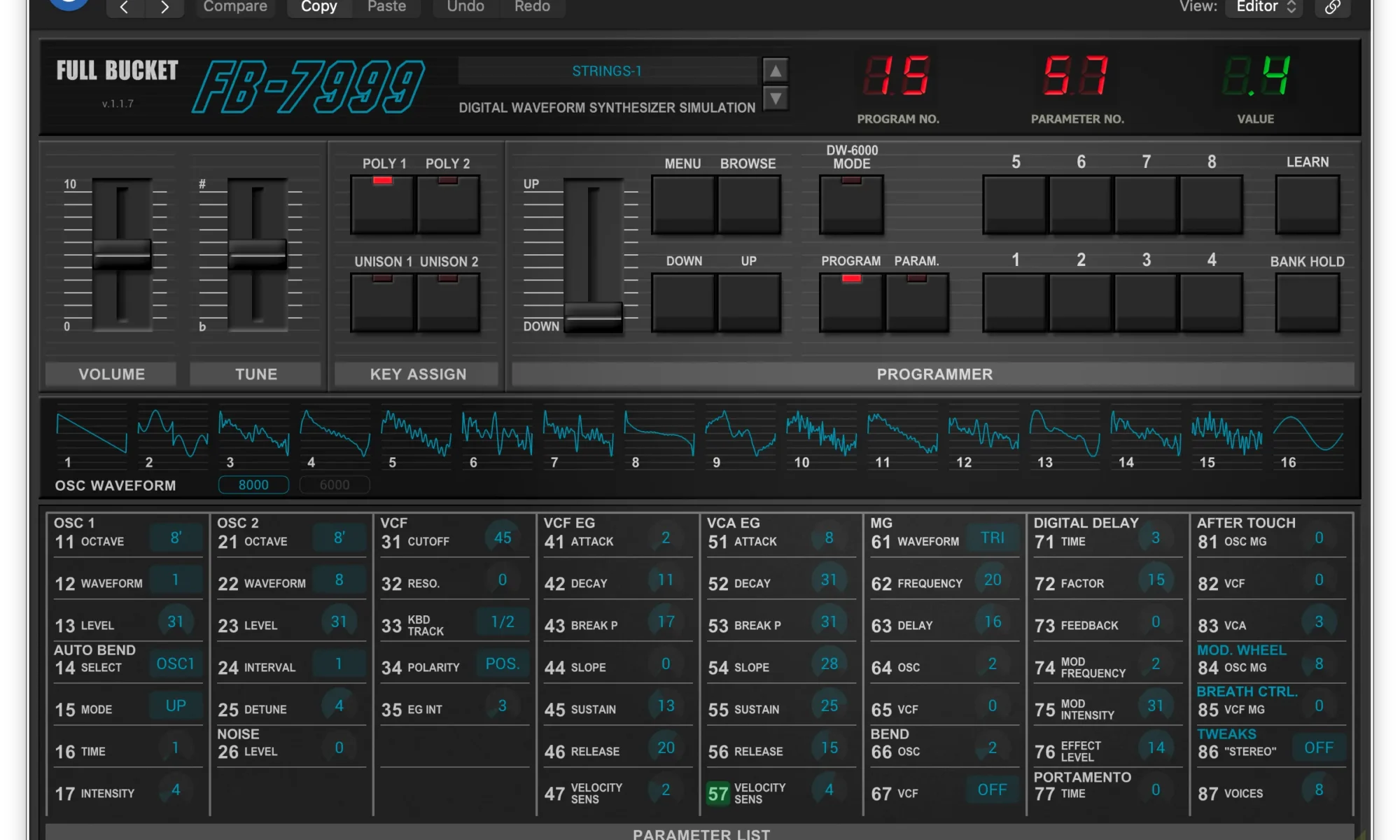
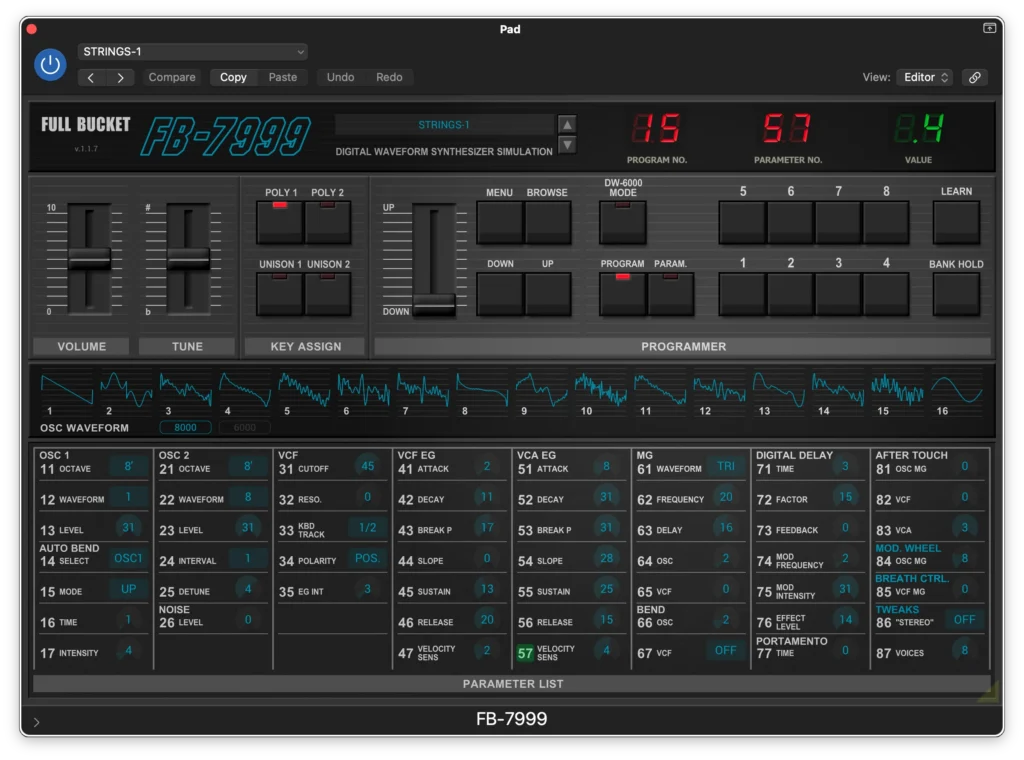
Despite the rock intention, I felt it could use a little sparkle, so I dropped in an instance of UA’s PolyMax synth with some nice arpeggiated tinkles driven from the chord track. To add a little more substance to later sections, I used a lovely synth strings patch from Full Bucket’s FB-7999 synth, a great software emulation of one of my favourite early digital synths, the Korg DW-8000.
At this point the verses sounded a little flat, so I added a little muted guitar with lots of delay to add movement and interest. Then I thought of really stripping back the second chorus to just bass and drums and almost acapella vocals. The bass line I had was just too slow and smooth for that kind of exposure, so I added a much more energetic slap bass track, played good and loud along with the vocals; that was fun to do!
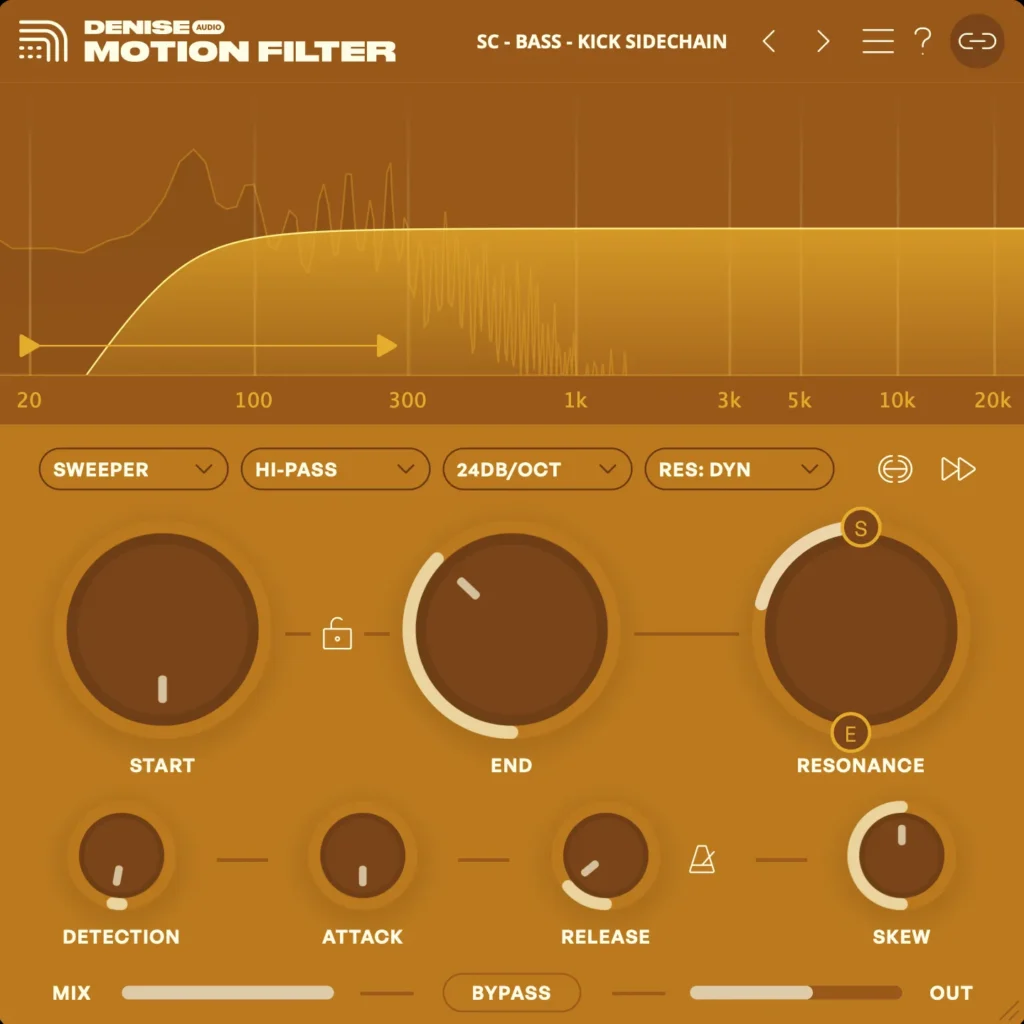
With so much bass going on, the kick was getting lost in the mix unless I made the drums unreasonably loud. I then received a very timely email from Adam Audio (I have a pair of their T5V monitor speakers) giving me a free copy of Denise Audio’s Motion Filter, which provided a great way of using the drums as a side chain to filter the bottom end of the basslines for a few milliseconds just when the kick is happening, and it really helped to give the kick some space and much more impact without making it louder.
The mix was gradually coming together, and many tweaks were applied while listening in my car and on my other headphones. While I feel my mix is quite bass heavy, the original track is even more so, but I just didn’t like how my mix sounded with that much bass. Mastering was done using Logic’s stock mastering plugin.
Anyway, it’s a great song that was fun to cover. If you like this song, please consider supporting me by buying my albums on Bandcamp, and sharing links to my music on your socials.